
Symptoms
What are the symptoms of MCC?
Merkel cell carcinoma (MCC) can be hard to notice, because it can look the same as other skin conditions.
Common symptoms include:
The most common symptom is a red or purple bump that grows quickly. This bump is usually painless and may look like a cyst.

What does MCC look like?
- MCC often looks like a reddish-purple or skin-colored firm bump. This bump usually appears on areas of the skin that are highly sun-exposed, like the head, neck, or arms. However, it can also show up anywhere on the body, even in places that are usually covered, like the buttocks or the scalp under hair
- This bump can get bigger quickly and might look inflamed (red or swollen)
- People often notice the bump because it is growing fast and ends up looking different from anything they have had before, so they tell their doctor about it
- MCC bumps may sometimes feel tender at the beginning, but more often don’t hurt when you touch them
How does MCC look different than other skin cancers?
How is it different than melanoma?
Melanoma is a different kind of skin cancer that starts in cells called melanocytes. Normally, healthy melanocytes are what give skin its color.
MCC is usually reddish-purple or skin-colored, whereas melanoma is usually dark brown or black. MCC is also often more raised and “bump-like” than melanoma.
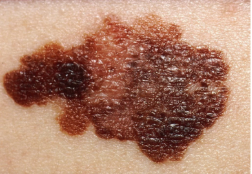
There is a well-known acronym used to look out for symptoms of melanoma: “ABCDE” — but this does not apply to Merkel cell carcinoma. MCC has unique features and uses its own acronym to describe the common characteristics. <Learn about the “AEIOU” criteria for MCC> [links to deep dive accordion in sec 2.1]
A characteristic malignant melanoma is shown with its brown-black colors. MCC does not ‘pigment’ like this. Photo credit: Wikipedia
How is it different than squamous cell carcinoma?
Squamous cell carcinoma is a type of cancer that starts in squamous cells. These are thin, flat cells found in the middle layers of the skin (epidermis), and also in the lining of some organs and parts of the breathing and digestive systems. When this cancer happens in the skin, it is called cutaneous squamous cell carcinoma.
MCC is not usually scaly and does not often have broken skin or sores on top, unless a doctor has just done a biopsy.
Squamous cell carcinoma, on the other hand, is more likely to be scaly or have an open sore on the surface.
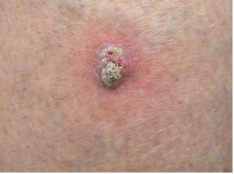
This squamous cell carcinoma has white scaly/crusty material in some areas, is missing normal skin in other areas, and can sometimes bleed. Photo credit: Skin Cancer Care