

Radiation therapy
Radiation therapy is a treatment that uses powerful energy waves or particles to kill cancer cells and shrink tumors. It is also called radiotherapy or X-ray therapy (XRT).
Radiation is aimed at the tumor and some of the normal-looking tissue around it. This area is called the radiation field. The radiation hurts the DNA of cancer cells so they cannot continue growing. It can also affect some healthy cells in the area.
Radiation therapy for Merkel cell carcinoma (MCC)
Merkel cell carcinoma (MCC) is a highly “radiation-sensitive” cancer in most cases, meaning radiation tends to work well on MCC tumors. Radiation therapy is an important part of treatment for MCC.
Radiation is often used after surgery, but sometimes it is done by itself.
- “Adjuvant radiation therapy” means using radiation as an additional treatment after surgery to destroy any cancer cells that might still be there, even if the doctor cannot see them
- Research and experience show that adding radiation therapy after surgery lowers the chance of MCC coming back in the same area or in nearby lymph nodes
- Recent studies also show that having radiation therapy within 8 weeks after surgery leads to better outcomes
- If surgery cannot remove all of the tumor, radiation therapy can sometimes be used by itself to control the cancer
Radiation therapy can be helpful for many people with stage I, II, or III MCC.
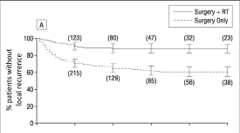
A study of a large group of patients with MCC showed that local recurrence was 3.7x more likely in people who had surgery alone compared to those who had surgery plus radiation.
Studies also suggest that adding radiation to surgery may improve a patient’s chance of survival and should be done within 8 weeks after surgery when possible.
Details of radiation therapy
Radiation therapy is usually given in a doctor’s office in small doses for 10-15 minutes, 5 days a week (e.g., Monday-Friday) over a set number of weeks (most commonly for 5 weeks). Patients will work with special doctors called radiation oncologists to plan their treatment.
Usually radiation is used to treat the area where the primary skin lesion is located. If a patient’s sentinel lymph node biopsy (SLNB) test was positive, radiation will likely also be used where the positive lymph nodes were found.
Experts agree that radiation treatment lowers the chances that MCC will come back in the future, for those who need it. Deciding who needs it can be more complex.
Side effects
Common side effects of radiation therapy happen in the area being treated. These may include hair loss, skin irritation that feels like a sunburn, and changes in how the skin looks or feels. If radiation is given to lymph nodes near the tumor, it can cause swelling of the arm or leg. This swelling can last a long time, especially if surgery was also done in the same area.
Feeling tired (fatigue) is another common side effect. This usually gets better within a month or two after treatment ends. It is important to eat healthy foods and get enough rest during radiation therapy.
A radiation oncologist may change your dose or schedule if you have strong side effects. Usually, radiation therapy to one area does not cause nausea, vomiting, or hair loss in other parts of the body.
The amount, or dose, of radiation used in treatment is measured in units called Gray (Gy). Typically, the total dose is ≥ 50 Gy.
The most common approach, called “conventionally fractionated, postoperative radiation therapy (cPORT)” gives 50 Gy total dose split into in 25 smaller fractions over several weeks.
Our team at merkelcell.org is studying an alternative approach called “single-fraction radiation therapy (SFRT)” (also known as single-fraction postoperative radiotherapy, or SF-PORT), which uses just one larger dose (8 Gy) of radiation, instead of many smaller doses, to shrink and sometimes eliminate a metastatic tumor.
We first described this approach in a 2015 report treating 93 tumors in 26 patients with advanced MCC, and we are still studying SFRT today.
What we have seen so far is that side effects are much lower with SFRT compared to the standard treatment given over many weeks—while the effectiveness appears to be similar in both.
Further research is needed to validate the sustained safety and efficacy of SFRT, but it could be a promising alternative, especially for treating MCC that is localized in the head and neck region, where conventionally fractioned treatment given over several weeks may cause acute toxicity. This approach could be particularly helpful for elderly or frail patients who need a treatment with fewer side effects.
You can learn more by exploring our recent clinical publications on the topic.