

Surgery
Surgical excision is a treatment where doctors remove Merkel cell carcinoma (MCC) from the skin and sometimes from nearby lymph nodes. This is usually the first step of treatment for MCC.
The goal of surgery is to remove any cancer that can be seen by the naked eye or under a microscope. This is done so the cancer does not come back near where it started, or in the lymph nodes.
Details of surgical excision
Patients who are scheduled for surgery should have already had a sentinel lymph node biopsy (SLNB) done, or it should be planned for the same day as the surgery.
- The SLNB is not the same as the skin biopsy you had when your cancer was first found. The purpose of the SLNB is to see if the cancer has spread to the nearby lymph nodes. The reason SLNB should be done before surgery is because surgery can change or damage the tiny vessels that link the tumor to the lymph nodes. Doing the SLNB first helps your doctors get the best information about whether the cancer has spread.
Surgery is done in an operating room by a special surgeon called a surgical oncologist. Patients will be under general anesthesia.
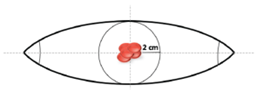
To help the scar heal well and look better, the surgeon may cut out the tumor in the shape of a football (ellipse). The scar will usually be about three times longer than the width of the area removed around the tumor. Often, the surgeon removes about 2 centimeters of normal skin around the tumor. Because of this, the scar can end up being as much as eight times longer than the width of the original MCC tumor.
Side effects of surgical excision
The side effects of surgical excision depend on where and how big the tumor is. Most side effects are related to how much skin the surgeon has to remove near the tumor. Ask your surgical oncologist what possible side effects may arise from your surgery.
Surgery is often paired with another treatment called radiation therapy.
This is done to further reduce the risk of recurrence (the chances that the cancer will come back). If surgery is done alone (without radiation), there is a higher chance that MCC will come back.
MCC is more likely than other skin cancers to come back in nearby skin, even a few centimeters away from the original tumor. With surgery alone, this risk can be as high as 20–40%. Adding radiation therapy after surgery can lower the chance of the cancer coming back to less than 5%.
Depending on your general health and the location and size of the MCC, surgery may not be possible. In such cases, radiation therapy is sometimes used alone and often has excellent outcomes.
When can surgery alone be used, without radiation?
Overall, this area remains controversial. Some studies (including ones from Bichakjian and Coit) suggest that MCC can be successfully treated with surgery alone, while other studies show that radiation reduces the risk of local recurrence by 2-3 fold.
A reasonable approach is that surgical excision alone is likely sufficient for certain low-risk tumors.
For example, no radiation is usually needed if:
- the tumor is relatively small (<2 cm)
- the sentinel lymph node biopsy is negative
- larger surgical excision margins (typically about 2 cm) are achieved
- there is no lymphovascular invasion noted by the pathologist
- the pathologist cannot find any tumor cells at the margin, and
- the patient has a healthy immune system (not immunosuppressed)
However, if one or more of these higher risk factors are present, it means there would likely be greater benefit of adding radiation therapy.
For more information about when to use radiation, see the <Radiation Therapy> page.
The “correct” surgical margin size varies based on the size and location of the tumor. In surgery, doctors will try to remove the tumor with a “clear margin”, which means no cancer cells are seen at the edge of the removed tissue when looked at under a microscope.
If radiation treatment will be used after surgery, it is not always necessary for the surgeon to remove extra tissue for clear margins, because the radiation will destroy any leftover cancer cells in the area. In this case, surgical margins can be very small and narrow (<1 cm when combined with adjuvant radiation).
In contrast, if radiation is not planned, margins that are greater than 1 cm (ideally 2 cm) are associated with a lower risk of recurrence.
Next steps
If you haven’t had these tests yet, they should be scheduled: an MCPyV serology blood test, a ctDNA blood test, and sentinel lymph node biopsy (SLNB). The MCPyV and ctDNA blood tests will give your medical team more information about how they should monitor your cancer over time and what to do when the disease is still detectable, while the SLNB checks whether the cancer has spread.
- Preferably, these tests should be done before surgery to establish a baseline. (A baseline is a starting point—your doctors use the first test results to know what is normal for you. Later on, they can compare future test results to this baseline to see if anything has changed). However, if they haven’t yet been completed, they should be planned as next steps
Your medical team will review the results from the surgery and then decide whether to add radiation treatment.